Views: 0 Author: Site Editor Publish Time: 2026-07-21 Origin: Site
Understanding how industrial drilling equipment operates goes far beyond simple engineering curiosity. We must view this knowledge as a critical prerequisite for successful equipment procurement. When you grasp the internal mechanics, you minimize unexpected downtime and protect your project schedules. Choosing the wrong drilling mechanism directly leads to severe operational consequences. You will face accelerated component wear, sluggish penetration rates, and ballooning maintenance expenses. Failure to understand specific operational requirements practically guarantees poor performance on the job site. This guide breaks down the functional mechanics of modern drilling machinery. We explore exactly how impact and rotation forces break through solid stone. Furthermore, we compare pneumatic and hydraulic power delivery systems in detail. You will discover an evidence-based framework designed to help you evaluate the exact machinery needed for your unique site requirements. Let us examine the engineering principles keeping global mining and construction projects moving forward safely and efficiently.
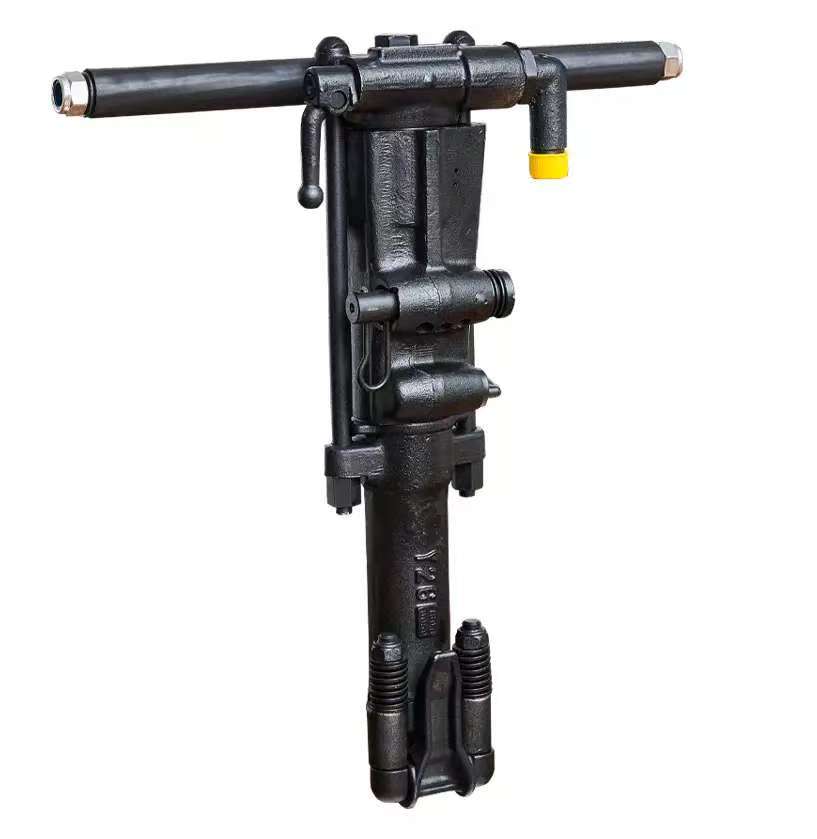
A rock drill operates on four simultaneous mechanical principles: percussion, rotation, feed pressure, and flushing. A failure in one halts the entire system.
Pneumatic rock drills offer rugged simplicity and lower upfront CAPEX, but require substantial continuous energy via air compressors.
Hydraulic rock drills deliver higher penetration rates and better energy efficiency (lower OPEX), but demand higher initial investment and strict fluid contamination control.
Equipment evaluation must be based on a matrix of rock hardness, hole diameter, site power infrastructure, and long-term maintenance capabilities.
Every reliable rock drill relies on a perfectly synchronized dance of four distinct mechanical forces. When you understand these simultaneous actions, you can identify operational inefficiencies before they trigger catastrophic equipment failure. A failure in just one of these pillars halts the entire excavation process.
Percussion serves as the primary force breaking the stone. A hardened steel piston repeatedly strikes the shank adapter or directly hits the drill steel. This violent action transfers massive kinetic energy straight down into the drill bit. The carbide buttons on the bit then fracture the solid rock face upon impact.
Operational considerations dictate careful energy tuning. Insufficient percussive energy causes the bit to bounce harmlessly against the rock. The tool chatters instead of penetrating. Conversely, excessive percussive energy overwhelms the tooling. You will experience premature bit breakage, shattered carbide buttons, and damaged steel threads.
Impact alone cannot drill a circular hole. The system must turn the drill bit slightly between every single piston strike. This rotation mechanism ensures the carbide buttons impact fresh rock during the next cycle. Without rotation, the bit simply pulverizes the exact same spot, wasting energy and burying the tool in rock dust.
You must carefully match your rotation speed to the specific geological hardness. Fast rotation in highly abrasive rock leads to severe friction and rapid tool wear. Slow rotation in softer ground causes the bit to bind and stall entirely.
Feed pressure keeps the machine pressed firmly against the working face. The feed mechanism pushes the drill string forward as the hole deepens. Proper thrust ensures maximum energy transfers smoothly from the piston into the stone.
Poor feed control creates major mechanical hazards. Too little forward pressure causes a dangerous condition called "blank firing." Impact energy reflects backward into the machine rather than entering the rock. This internal reflection destroys internal seals and damages the striking bars. Conversely, applying too much forward thrust stalls the rotation motor entirely.
Drilling generates massive amounts of pulverized rock. The flushing mechanism forces compressed air or pressurized water down the hollow center of the drill steel. This high-velocity fluid sweeps rock cuttings out of the hole continuously.
Inadequate flushing causes immediate operational headaches. It remains the leading cause of jammed drill strings worldwide. If heavy cuttings stay inside the hole, they pack tightly behind the bit. This traps your valuable tooling permanently beneath the surface.
To assess long-term reliability, you must inspect the core internal components. The physical anatomy dictates how well the machine survives punishing daily usage. Let us examine the specific parts carrying the heaviest mechanical loads.
These parts form the beating heart of the machine. The piston cycles at incredible speeds inside the cylinder to generate kinetic impact force. When evaluating machinery, investigate the metallurgical quality and surface hardening of these items. Even minor wear or micro-scoring on the piston directly degrades your daily penetration rates. Look for premium steel alloys specifically engineered to resist high-cycle fatigue.
The shank adapter and chuck endure tremendous mechanical abuse. They must transfer both violent percussive impacts and constant rotational torque into the drill string. Consequently, they act as the primary wear parts in any system. Always evaluate the market availability and replacement cost for these specific pieces. You will replace them frequently during standard maintenance cycles.
This long component runs straight through the center of the machine. It delivers the essential clearing fluid down the drill string. The tube must resist extreme environmental corrosion and high-frequency vibration. A failed flushing tube spells absolute disaster for your equipment. It allows pressurized water or abrasive dust to leak directly into the internal lubrication system. Such contamination destroys precision bearings within hours.
The internal valve block directs the rapid flow of compressed air or hydraulic fluid. It actively controls the rapid cycling rhythm of the heavy piston. When reviewing a machine, look closely at the valve complexity. Simpler valve blocks often allow for straightforward field-serviceability. Highly complex valves might offer marginally better energy efficiency, but they require highly specialized technicians for routine repairs.
Component | Primary Function | Critical Failure Indicator |
|---|---|---|
Piston & Cylinder | Generates kinetic impact energy | Sudden, unexplained drop in penetration rate |
Shank Adapter | Transfers impact and rotational forces | Visible thread wear, cracking, or mushrooming |
Flushing Tube | Delivers clearing fluid (air or water) | Water leaking into primary lubrication ports |
Valve System | Cycles fluid rapidly to drive the piston | Inconsistent, stuttering, or weak impact rhythm |
Choosing between air and fluid power dictates your entire operational setup. Both power delivery technologies offer unique advantages depending on your specific environment. A rock drill performs best when its power source matches the project constraints perfectly. Let us explore these functional differences.
Pneumatic machines rely on high-volume compressed air provided by external diesel compressors. The air flows rapidly through the valve block to drive the internal piston. Interestingly, this exact same air stream often provides the necessary hole flushing to clear debris.
Air-powered units thrive in harsh, remote sites. They handle extreme temperature fluctuations perfectly without suffering fluid viscosity issues. They also excel in environmentally sensitive areas. In pristine ecosystems, accidental hydraulic oil leaks pose massive regulatory risks. Air systems eliminate this specific environmental hazard. Furthermore, they suit developing sites lacking advanced maintenance infrastructure.
Financially, pneumatic systems feature a lower initial capital expenditure. You can usually rebuild them directly in the dirt using standard hand tools. However, they consume massive amounts of diesel fuel over their lifespan. Compressing air remains inherently inefficient, driving up continuous operational expenses day after day.
Hydraulic units use highly pressurized, specialized fluid to actuate the piston. This advanced system typically offers precise, variable control over both impact frequency and rotation torque.
Fluid power heavily dominates high-production mining, tunnel development, and large-scale commercial quarrying. In these demanding sectors, daily penetration speed dictates ultimate project success. Hydraulic machines punch through hard rock significantly faster than their air-powered counterparts.
From a financial perspective, fluid power demands a much higher upfront investment. Despite this steep entry cost, these systems boast exceptional energy transfer efficiency. They require pristine fluid maintenance at all times. You must employ skilled technicians on site to prevent microscopic dirt from contaminating the closed-loop hydraulic lines.
Your unique site infrastructure strongly dictates which machinery you can realistically deploy. Ignoring these environmental factors guarantees poor performance. Careful planning prevents major deployment failures.
Air-powered systems demand precise compressor matching. You must accurately calculate the exact Cubic Feet per Minute (CFM) and operating pressure (PSI) required by the drill. Factoring in pressure drops across long air hoses is critical. A mismatch starves the machine of necessary power. Conversely, hydraulic units require deep structural integration. You must pair them with a dedicated carrier vehicle, a heavy excavator arm, or a standalone diesel power pack.
Drilling happens exclusively in high-friction, dust-choked environments. Proper, consistent lubrication remains absolutely mandatory for survival. For air-powered systems, you must install reliable in-line oilers. These devices inject a fine, continuous mist of specialized rock drill oil directly into the air stream. For fluid-powered models, you must enforce incredibly strict filter replacement schedules. Skipping a single hydraulic filter change invites microscopic debris to score the piston, leading to premature mechanical seizure.
Strict safety regulations strongly influence modern equipment selection. You must evaluate built-in noise suppression features to protect workers' hearing. For handheld units, vibration-dampening handles prevent operator nerve damage over extended shifts. Dust mitigation requires serious attention. You must carefully compare wet water flushing against dry vacuum collection systems. Ensuring your setup fully complies with modern occupational safety regulations protects your workforce and prevents costly site shutdowns.
Procurement requires an objective, evidence-based approach rather than guesswork. Follow these structured evaluation steps to identify the perfect machine for your specific geological conditions.
Start your search by establishing firm baseline performance requirements. Determine the exact penetration rate needed to meet your daily production quotas. Clearly define your target hole diameter and the maximum drilling depth required by the blast pattern. Establishing these three metrics eliminates unsuitable, undersized machines immediately.
Next, audit your physical operating environment thoroughly. Evaluate your available power sources and logistical access. If you operate at very high altitudes, remember that thin atmospheric air drastically reduces standard compressor efficiency. This negatively impacts pneumatic drill performance. Always review local environmental regulations regarding acceptable noise limits and strict fluid spill policies.
Move away from general research toward active, detailed evaluation. Request comprehensive technical specification sheets from several reputable manufacturers. Compare their impact frequency ratings and rotational torque capacities side-by-side. Most importantly, consult directly with an application engineer. Ask them to run a site-specific rock hardness test on your core samples. This scientific testing guarantees perfect equipment matching before you sign a purchase order.
Understanding the internal operational mechanics completely removes the dangerous guesswork from procurement. When you grasp how percussion, rotation, feed pressure, and fluid flushing interact, you make vastly smarter purchasing decisions. The choice between pneumatic and hydraulic systems ultimately requires balancing your initial capital against your long-term production needs. Site infrastructure heavily influences this final decision. Do not leave your daily productivity to chance or vague estimates. We highly encourage you to contact a technical sales representative immediately. Share your specific rock hardness data and exact hole diameter requirements with them. They will provide tailored equipment matching to keep your operation running smoothly and efficiently.
A: Flushing uses compressed air or pressurized water to remove pulverized rock cuttings from the hole continuously. Without active flushing, the drill bit simply grinds the exact same rock chips into a fine powder. This rapidly destroys the expensive carbide buttons on the bit. Eventually, trapped debris will cause the entire drill string to jam permanently in the hole.
A: A piston's lifespan varies heavily based on routine maintenance, lubrication quality, and operating pressure. A well-maintained hydraulic piston can easily last for several thousands of active percussion hours. Conversely, poor lubrication practices or contaminated fluid can completely destroy a piston in just a few days of use.
A: No. The internal mechanics, metal tolerances, and power delivery components are fundamentally different between the two technologies. Switching power delivery types requires purchasing a completely dedicated hydraulic or pneumatic machine. Retrofitting one technology into the other casing is mechanically impossible.
A: Rock hardness dictates the delicate balance of energy required. Harder rock needs significantly higher percussive impact energy and much slower rotation speeds to fracture the material properly. Softer rock requires less impact force but faster rotation to maintain optimal penetration rates. Incorrect operational settings will easily stall the bit.