Breaking solid stone efficiently requires far more than just blunt force. Selecting the wrong drilling equipment bottlenecks entire project timelines in mining, quarrying, and civil construction. It rapidly inflates your operational budgets while forcing crews to endure unnecessary downtime.
You simply cannot treat these heavy machines as generic commodities. Effective procurement demands rigorously evaluating your specific geological conditions, available site infrastructure, and daily production targets. Mismatched tools inevitably lead to broken shanks, dangerous dust levels, and stalled excavation operations.
We designed this comprehensive guide to move well beyond basic equipment definitions. You will gain a reliable technical evaluation framework for categorizing, comparing, and sourcing the right machinery. Ultimately, we show you exactly how to procure the optimal rock drill for your specific site requirements.
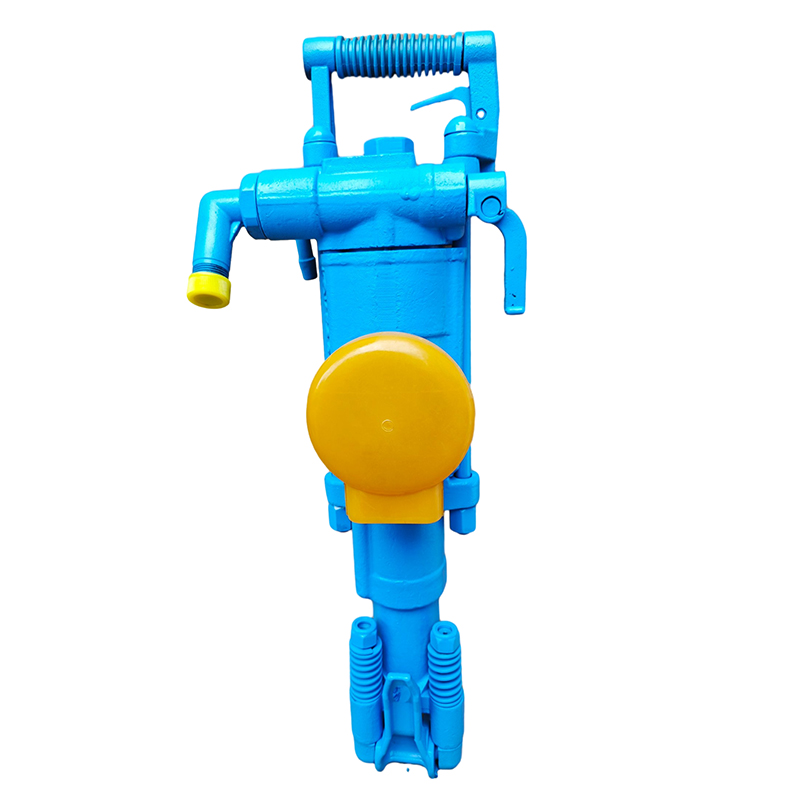
A rock drill is a specialized tool that combines percussion (impact) and rotation to fracture rock, while using a flushing mechanism (air or water) to clear debris.
The primary decision divides into pneumatic rock drills (lower upfront cost, highly durable) versus hydraulic rock drills (higher penetration rates, energy efficient).
Total Cost of Ownership (TCO) relies heavily on matching the drill’s specifications (hole diameter, depth capacity) to the site’s exact rock hardness and available compressor infrastructure.
Dust control (compliance) and vibration dampening (operator safety) are now strict baseline evaluation criteria, not optional add-ons.
Every efficient rock drill relies on a synchronized three-part action. It fractures hard materials smoothly without stalling. We categorize these essential actions into percussion, rotation, and flushing. You must understand how they interact. If one mechanism fails, the entire excavation process stops immediately.
Percussion: The internal piston violently strikes the drill steel. It transfers kinetic energy directly to the bit. This impact shatters the stone immediately beneath the carbide inserts. High-frequency strikes create deep micro-fractures in the rock face.
Rotation: The tool turns the bit slightly after every single blow. It exposes fresh, solid stone for the next piston strike. This turning motion prevents the bit from wedging or jamming in the hole. It guarantees a perfectly round bore for explosive charges.
Flushing: Compressed air or pressurized water flows rapidly down the center hole of the steel. It blasts away crushed cuttings and rock dust. Proper flushing keeps the hole completely clear. It prevents the bit from re-grinding previously broken material, which causes severe overheating.
You measure equipment efficiency by evaluating these three forces. They must balance perfectly against the target rock's compressive strength. Soft limestone requires entirely different impact energy than hard granite. Proper alignment of these mechanics prevents unnecessary equipment wear.
Action Mechanism | Primary Function | Failure Result |
|---|---|---|
Percussion | Shatters solid rock via impact | Low penetration rates, stalled progress |
Rotation | Exposes new rock, prevents jamming | Stuck bits, fractured drill steel |
Flushing | Evacuates crushed cuttings and dust | Re-grinding, severe bit overheating |
Procurement teams usually face a strict binary choice. They must select either air-powered or fluid-powered systems. Each category serves distinct operational environments. You must match the power source to your site's specific constraints.
These robust machines are powered entirely by compressed air. They represent the traditional standard for many construction and mining operations.
Pros: They are highly durable. They require a much lower initial capital investment. Field mechanics find them significantly easier to maintain. They tolerate extremely harsh environments well.
Cons: They demand massive external air compressors. They generally operate at much higher noise levels. Penetration rates often lag behind modern alternatives.
Best For: Remote sites face logistical challenges. Tight budgets restrict large capital expenditures. Environmentally sensitive areas prohibit any risk of hydraulic fluid leaks.
These advanced units operate using highly pressurized hydraulic fluid. They deliver exceptional power transfer efficiency.
Pros: They achieve significantly higher penetration rates. They boast lower energy consumption per meter drilled. They operate much quieter than air-powered equivalents.
Cons: They require substantial upfront capital costs. They demand highly skilled maintenance personnel. Clean operating conditions matter greatly to prevent fluid contamination.
Best For: High-production mining relies on speed. Large-scale tunneling operations demand continuous boring. Heavy civil engineering projects require rapid advancement.
You will encounter several specific tool shapes. Hand-held sinkers drill vertically downwards. Construction crews use them for shaft sinking. Stoppers drill straight upwards into tunnel roofs for rock bolting. Pluggers handle light-duty concrete and masonry work. Conversely, rig-mounted drifter drills manage horizontal and directional boring. They sit on large mechanized booms.
You cannot purchase equipment based solely on a spec sheet. You must evaluate the machinery through three specific lenses. This process ensures the tool actually meets your daily production needs.
Hole Diameter and Depth: Define your required bore size precisely. Base this metric on your exact blasting patterns. Match it carefully to your site's rock bolting requirements. Undersized tools will fail to reach required depths efficiently.
Rock Hardness: Use the Mohs Scale or Unconfined Compressive Strength (UCS) metrics. Specifying your exact geology prevents premature bit wear. It stops sudden shank failure. Rocks exceeding 150 MPa demand specialized heavy-duty impact mechanisms.
Assess your existing site power sources. You must verify air compressor capacity before purchasing a pneumatic rock drill. Check both the CFM (Cubic Feet per Minute) and PSI (Pounds per Square Inch) capabilities. A starved machine drastically underperforms and causes internal heat damage.
Silica Dust Control: Dust mitigation is a strict legal requirement. OSHA standards dictate rigid occupational health compliance. Evaluate integrated water-flushing systems carefully. Consider powerful industrial vacuum attachments for dry environments.
Vibration and Noise Dampening: Operator fatigue directly slows down daily production. Assess ergonomic handle designs. Check for built-in polymer mufflers. Comply strictly with your local site noise regulations.
Purchase prices only represent a fraction of your actual expenses. You face numerous ongoing operational realities. Proper maintenance protocols keep your site profitable.
Drill bits, striking bars, and coupling sleeves degrade rapidly. They demand frequent, predictable replacement cycles. Track these consumables closely. Using dull bits forces the internal piston to absorb excessive shock waves. This ruins the entire machine.
Air-powered tools require constant, high-quality oiling. Operators frequently neglect the external inline oiler. This negligence causes catastrophic piston scoring. It destroys the cylinder completely. Always use specialized rock drill oil designed to atomize properly within the airstream.
Operator training remains absolutely essential. Teach your crews proper physical techniques. They must never "force" the tool into the ground by leaning on it aggressively. Forcing misaligns the internal strike. It rapidly fractures internal components. Crews must let the machine's impact energy do the actual work.
Procuring heavy excavation equipment requires a disciplined methodology. Follow a structured approach to narrow down your optimal choices.
Audit site geology and targets: Calculate your required meters drilled per hour based on daily production quotas. Analyze your rock's exact compressive strength.
Inventory available power sources: Compare your existing air compressors against necessary hydraulic power packs. Determine if infrastructure upgrades are required first.
Filter by compliance requirements: Ensure strict adherence to dust, noise, and vibration regulations. Rule out any equipment failing modern safety standards.
Demand robust support from your chosen equipment partner. Check their guaranteed spare parts availability. Scrutinize their warranty terms carefully. Require strict on-site servicing SLAs (Service Level Agreements). A cheap tool becomes incredibly expensive if parts take weeks to arrive.
Do not guess your heavy equipment requirements. Request a professional site audit immediately. Schedule a technical consultation with an expert. Match a highly specific rock drill precisely to your project blueprint to guarantee profitability.
Treating this essential machinery as a generic commodity guarantees failure. It consistently leads to inflated maintenance budgets. It stalls critical excavation projects and frustrates field crews.
Make the most profitable operational choice. Balance your upfront infrastructure limitations with your long-term penetration rate requirements. Prioritize operator safety through rigorous dust and vibration control features. Invest heavily in proper crew training, as it drastically extends equipment lifespans. Finally, only partner with vendors who guarantee rapid spare parts delivery to keep your site moving.
A: It depends heavily on the drill's weight class. A lightweight 30-pound model typically requires 60 to 80 CFM at 90 PSI. A heavier 60-pound sinker often demands 110 to 130 CFM at 90 PSI. Always consult the manufacturer specifications. Running a machine on insufficient air volume drastically reduces impact energy and stalls penetration.
A: Replacement intervals rely entirely on rock abrasiveness and operator technique. Drilling highly abrasive quartz requires frequent bit sharpening, sometimes after just a few meters. Softer limestone allows much longer intervals. Operators who force the tool or neglect proper flushing will destroy carbide inserts prematurely. Inspect bits daily for noticeable wear flats.
A: Sinker drills are portable, hand-held units designed primarily for vertical downward drilling. Crews use them for secondary blasting or shaft sinking. Drifter drills are much larger, heavier units mounted on mechanical booms or rigs. They handle horizontal, directional, or deep-hole boring in large tunneling and mining operations.
A: Yes, specific models operate underwater. Marine construction teams typically use heavily adapted pneumatic drills for these tasks. Air-powered models naturally resist water damage better than electric alternatives. However, they require specialized exhaust routing to prevent bubble interference. They also demand high-grade marine lubricants to prevent internal corrosion from saltwater exposure.